
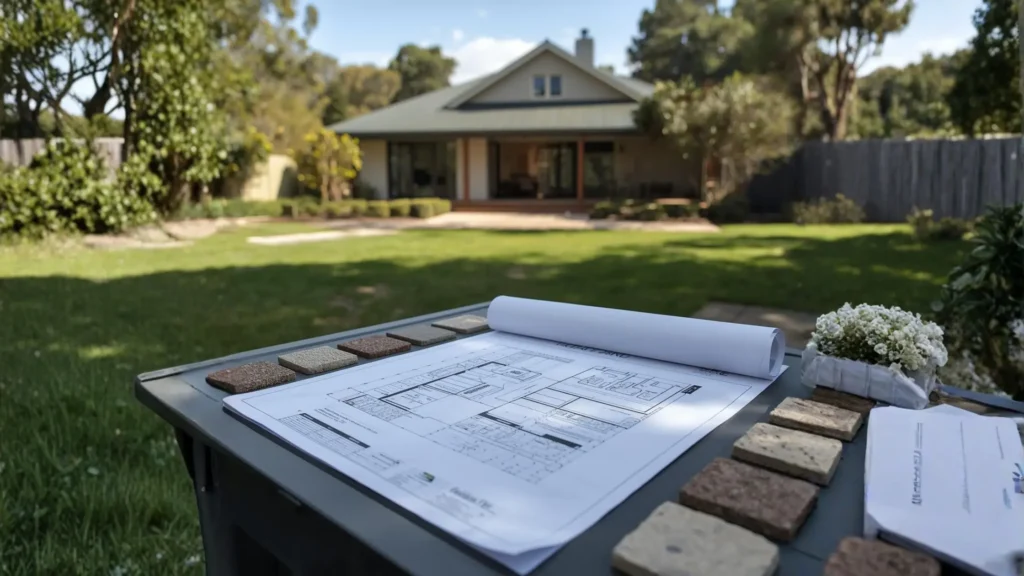
Many homeowners make a critical mistake. They go to the nursery, buy the plants that look pretty that day, and plant them randomly.
Two years later, the yard looks chaotic. The trees are too big for the house, and the colors clash.
We believe that Landscape Design is not gardening; it is architecture without a roof. Before we dig a single hole, we apply five universal artistic principles to ensure your property looks cohesive and intentional.
Here is the framework we use to design award-winning spaces in the Pacific Northwest.
Line (The Structure)
Controlling the eye.
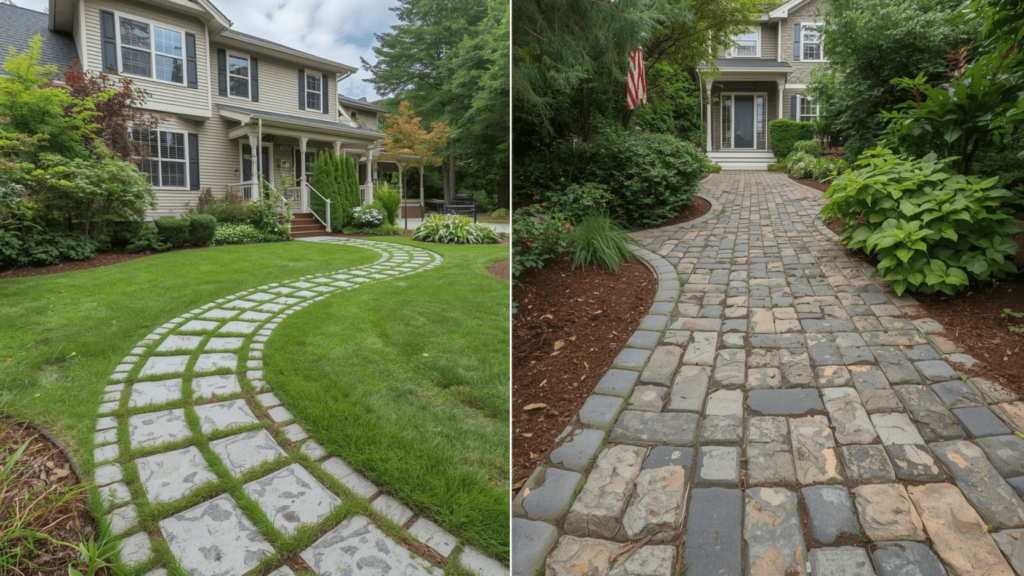
Lines dictate how you move through a space.
- Straight Lines: Create a formal, modern, or structural look. They are powerful and direct.
- Curved Lines: Mimic nature. A winding paver walkway slows the pace and invites exploration.
- Vertical Lines: Tall columnar trees (like Italian Cypress or Sky Pencil Holly) draw the eye up, making small yards feel larger.
Scale (The Proportion)
Fitting the puzzle pieces.
Scale is the relationship between the size of the plants and the size of your home. A common error is planting a small, delicate shrub next to a massive two-story wall—it gets lost. Conversely, planting a massive Oak tree in a tiny front yard will eventually swallow the house. Our Rule: We choose plant material that complements your home’s mass, not competes with it.
Texture (The Surface)
Beyond just “Green”.
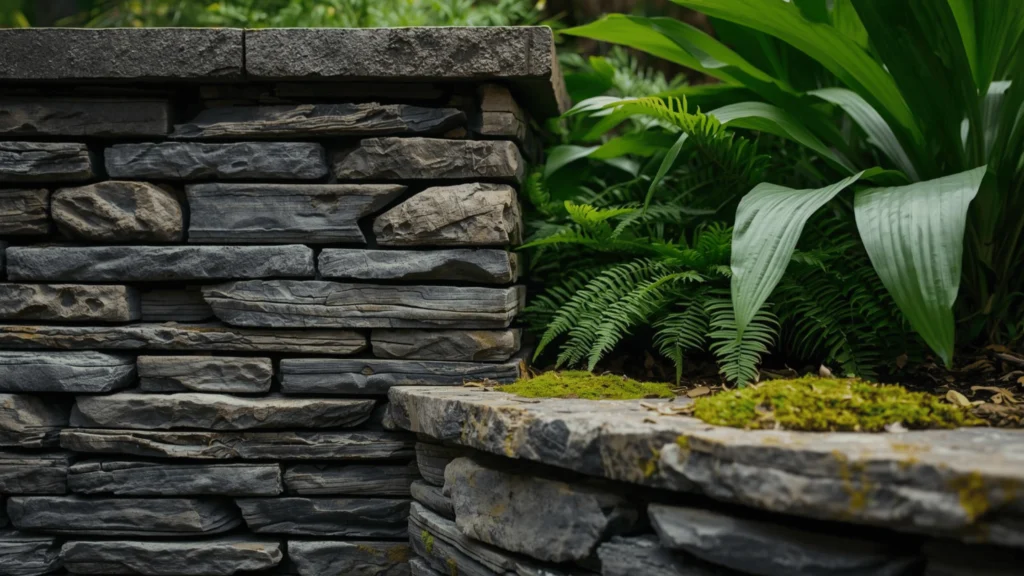
A visually interesting landscape relies on contrast. If every plant has small, shiny leaves, the yard looks flat. We mix textures to create depth:
- Coarse: Large leaves (like Hostas or Rhododendrons) or rough boulders.
- Fine: Delicate ferns or ornamental grasses.
- Hard vs. Soft: The roughness of a stacked stone wall highlights the softness of the moss growing on it.
Color (The Emotion)
More than just flowers.
Color is powerful, but it must be used with restraint.
- Cool Colors (Blues, Purples): Create a sense of calm and distance (making a small yard feel deeper).
- Warm Colors (Reds, Oranges): Grab attention instantly. We use these sparingly at focal points, like an entryway or a patio border.
- Year-Round Strategy: In Washington, we design for the “Grey Season.” We prioritize evergreens and colorful bark (like Red Twig Dogwood) so your design holds up in January.
Balance (The Equilibrium)
Symmetrical vs. Asymmetrical.
- Symmetrical Balance: Mirror images. A matching pot on either side of the front door. This implies formality and order.
- Asymmetrical Balance: This is harder to achieve but more natural. A large tree on the left might be balanced by a group of three medium shrubs on the right. It feels stable, but relaxed.
A beautiful landscape doesn’t happen by chance. It happens by following the rules of composition.
You can spend thousands on plants and still end up with a messy yard. Or, you can invest in a Master Plan.
Ready to see the potential of your property? Don’t just plant. Design. Schedule a consultation with our team to start your Master Plan today.